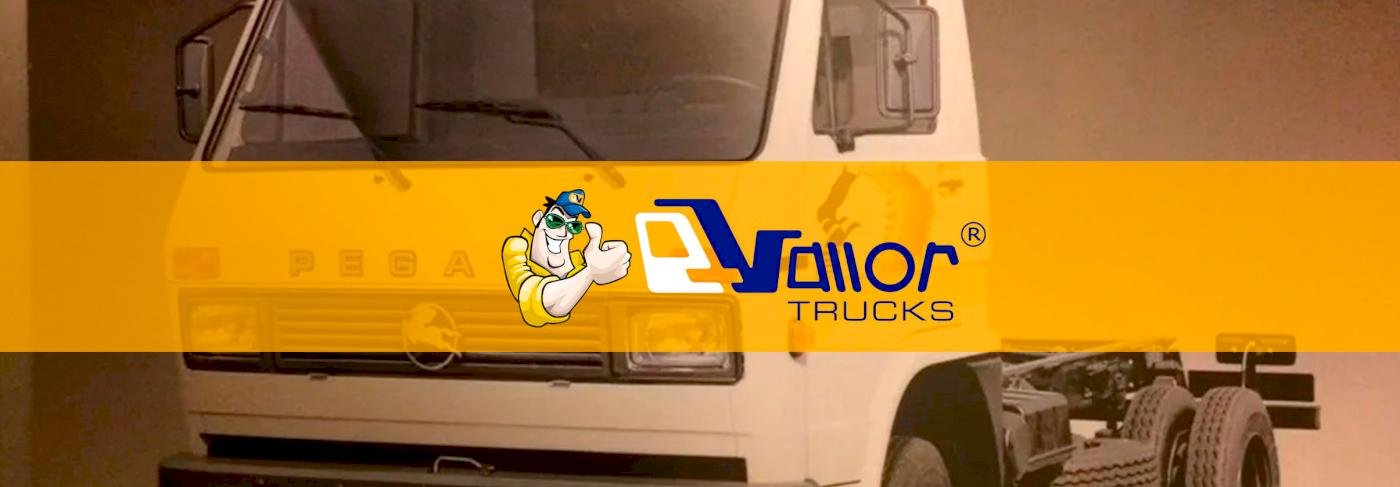






A legend, Pegaso Troner – the greatest of the greats.
The key T-3 project, the development of which began in 1983 and required an investment that Pegaso alone was unable to meet, led to the search for a partner to develop the prototype, which was subsequently named the Pegaso Troner during its mass production phase, and which is regarded as the result of agreements between similar companies – namely the Spanish firm ENASA and the Dutch firm DAF – which led to the creation of the joint venture CABTEC, established to jointly develop a new cab for the Pegaso Troner model and the DAF 95 from the Dutch firm DAF, which would subsequently be customised by each manufacturer.3 The result was the Pegaso Troner, which was presented to King Juan Carlos I at the Barcelona Motor Show in 1987.
The interior of the Pegaso TRONER cab was designed for long periods away from home, for international routes, featuring air conditioning, thermal and acoustic insulation, air-suspension seats with lumbar support, an independent heater, a wardrobe, a full-length curtain, electric windows, a safety grille, bunk beds (with a Flex spring mattress), a retractable table, a radio cassette player, etc. All the features were within easy sight and reach. The range comprised four trim levels: from the most basic TL, TS and TR, to the most luxurious TX.
In 1992, the 400cv Troner 1240 was launched, representing the pinnacle of engine power, featuring a ZF 16S 160 Ecosplit gearbox, ABS, air suspension and an electronic speed limiter. This version of the 12-litre, 6-cylinder in-line engine (96R1FX) represented the cutting edge in terms of power; each intake valve has a separate duct from the cylinder head, improving turbulence within the cylinder, and air flow; the optimised central positioning of the injector allows for high injection pressures. All these modifications result in an engine which, at the same revs as the previous 367cv model, delivers 400cv at 1,200 rpm and 170 mkg of torque, providing a higher average speed whilst reducing fuel consumption.
In July 1993, production of the Troner came to an end, with more than 8,500 units sold. It was to be replaced by the Iveco Euro-Tech range, which was in the same line and segment as the Troner. Iveco, which still had a large stock of Pegaso Troners in storage, did not make this public until some time later.